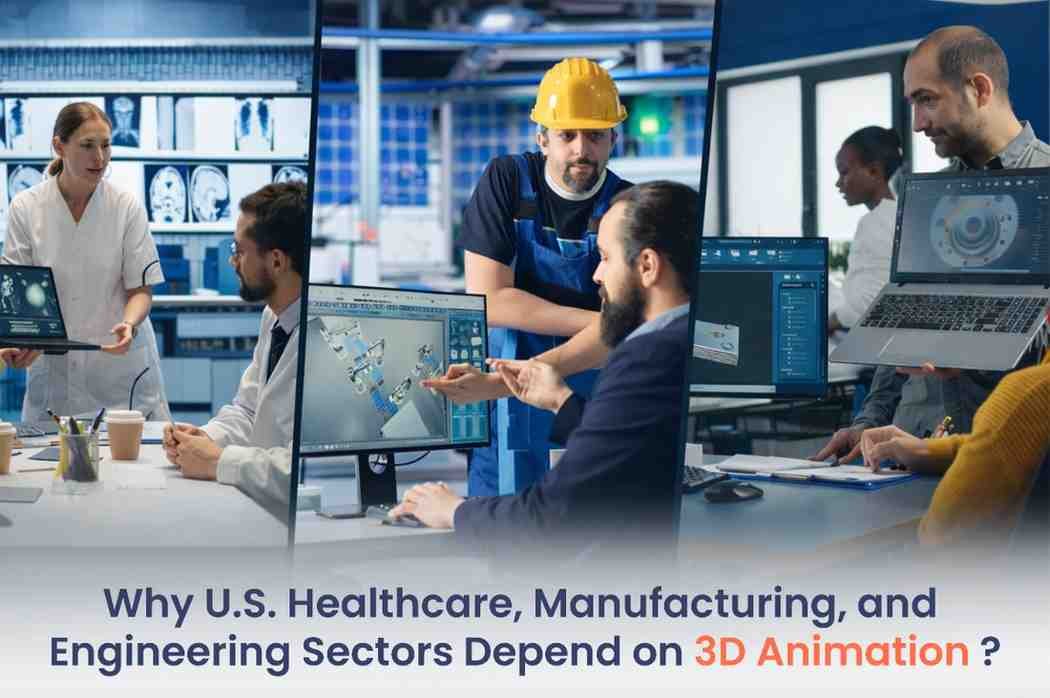
As U.S. industries deal with products, systems, and training that keep getting more complex, 3D animation has stopped being optional. It’s now a core communication and learning tool.
The global 3D animation market, pushed by demand from healthcare, engineering, and manufacturing, is set to cross $53 billion by 2033. That number says a lot. This isn’t about entertainment anymore.
3D animated visualization helps teams grasp tight processes, strengthens safety training, and supports design review. Where precision matters, animation closes gaps that text and static visuals leave wide open.
The Role of 3D Animation in U.S. Healthcare
In U.S. healthcare, 3D visual storytelling now sits at the core of communication, stepping in where complex procedures, devices, and treatments outgrow what words alone can explain.
Improving Medical Education and Training
Medical schools, hospitals, and training providers use 3D medical animation because it shows what words and flat images cannot. Anatomy makes sense. Surgical steps fall into order. Treatment pathways stop feeling abstract.
The visuals of animation support clinician training, continuing medical education, and onboarding by laying out spatial relationships and procedural flow in a way the brain can actually follow without strain.
Supporting Patient Understanding
Healthcare providers use 3D animation because explanations fall apart without it. 3D medical animation enhances patient education by letting patients see diagnoses, surgery options, and treatment plans unfold inside the body, not just hear about them.
That visual clarity stops confusion from stacking up. Patients see what’s really happening instead of guessing. They ask sharper questions. They make decisions with their eyes open. At the same time, it keeps conversations between clinicians and patients clean, direct, and grounded in what’s actually going on, not rushed explanations.
Enhancing Medical Device and Pharmaceutical Communication
3D animation steps in where words start failing. It shows how medical devices work inside the body and how pharmaceutical products act at a biological level, without leaving room for confusion. These visuals back regulatory submissions, professional education, and product communication by laying everything out in clear, accurate sequences that stay locked to clinical and scientific standards.
Why Manufacturing Teams Rely on 3D Animation
As U.S. manufacturing systems grow more complex and interconnected, teams rely on visual formats to line everyone up, cut errors, and keep processes clear across departments.
Visualizing Complex Production Processes
Manufacturers use 3D animation to lay the whole process out in front of you, step by step. Assembly lines. Workflows. Operational sequences. You see how components move, how machines respond, how teams fit into the flow. Nothing stays abstract.
By showing timing and dependencies in motion, animation cuts down the confusion that text-heavy documents and flat diagrams often leave behind.
Training and Safety Communication
3D animation steps into training and shows exactly how machines run, how safety rules play out, and how maintenance should happen, all in a controlled visual space. Employees see the right way first, before they touch the equipment at all.
That clarity hits early. It stops confusion before it starts. It keeps safety front and center. And it makes the expectations clear from the very beginning.
Product Design and Stakeholder Communication
Manufacturing teams use animation when there’s nothing physical on the table yet. It shows how a product functions, how parts move, and how everything fits into a bigger system. That visual keeps design reviews grounded, supplier talks clear, and customer presentations focused.
Everyone looks at the same reference, so technical and non-technical teams stop guessing and stay aligned through the full development cycle.
How Engineering Firms Use 3D Animation Services
Engineering firms use 3D animation services to communicate technical detail with clarity across complex projects. As designs become more sophisticated, visual tools help teams explain intent, validate decisions, and coordinate with multiple stakeholders.
Explaining Technical Systems and Designs
3D animation lets engineers actually see mechanical, civil, electrical, and structural systems in three dimensions instead of wrestling with flat drawings. It turns dense specifications into visual sequences that show how systems interact, step by step. That clarity makes internal coordination smoother and helps teams explain designs without forcing everyone to decode heavy technical documents first.
Supporting Project Planning and Approvals
Engineering animations step in when drawings and specs stop making sense to people outside the technical loop. They show how a system will actually work once it’s built, cutting confusion for clients, regulators, and reviewers. That clarity helps teams judge feasibility and compliance early, before wrong assumptions creep in. When everyone sees the same thing from the start, fewer revisions pile up later.
Simulation and Process Validation
Engineering teams use animation to see how a system behaves when conditions change. It lets them watch the design respond, spot weak points, and make calls before anything gets built. By running scenarios visually, teams catch issues early, plan with more control, and stay aligned long before implementation starts.
Why 3D Animation Works Better Than Traditional Formats
3D animation works better because it shows things in motion, not frozen on a page. You can see movement, interaction, and spatial relationships that text and static images simply cannot carry.
In healthcare, manufacturing, and engineering, most processes unfold step by step or inside tight spaces. Animation puts those actions in front of you, in context, so the system makes sense fast.
When steps appear in the right order, the mental strain drops. Viewers don’t have to imagine how parts connect or how actions progress. That clarity speeds understanding for technical teams and non-technical audiences alike, helping everyone align faster and make decisions without endless explanation.
Integration of 3D Animation Into Digital Workflows
Modern digital workflows across U.S. industries leave little room for friction, and animation fits straight into that flow. These assets work across eLearning platforms, presentations, simulations, and digital documentation, so teams reuse the same visuals instead of rebuilding them for every system. That keeps communication consistent and avoids wasted effort.
Organizations use animation inside internal training systems for onboarding and upskilling, then extend the same assets to client presentations and regulatory reviews. Teams store them in knowledge repositories and pull them up as needed. This flexibility makes visual learning part of everyday operations, not a one-time add-on.
The Growing Demand for Specialized 3D Animation Services in the U.S.
Demand for specialized 3D animation services in the U.S. keeps rising because accuracy and technical clarity leave no room for guesswork.
Healthcare, manufacturing, and engineering teams need partners who know the standards cold, use the right terminology, and actually understand how real workflows move on the ground. General visual content falls apart the moment precision or compliance enters the picture.
Specialized animation teams bring that technical understanding to the table. They know how to represent systems, procedures, and products without cutting corners. They factor in regulations, safety rules, and documentation from the start.
As animation becomes part of training, planning, and communication, precision turns into the center of everything. Industry-specific expertise makes sure these visuals support sound decisions and stay aligned with professional and operational standards.
Choosing the Right 3D Animation Partner
Choosing the right partner for complex visualization work takes more than creative skill. Teams looking for 3D animation services in USA need providers who understand the industry and get the details right.
In healthcare, manufacturing, and engineering, every system, process, and product must be shown with accuracy, while staying aligned with regulatory, safety, and documentation needs.
A reliable 3D animation company in USA also has to scale. Animation assets often move across training, planning, and communication workflows, and they must stay consistent every time.
QA Solvers works within these demands by pairing domain knowledge with structured production processes. This setup helps organizations expand animation use across teams while keeping clarity, compliance awareness, and operational alignment intact.
Conclusion
3D animation has stopped being just visual support. It now works as a hands-on tool for training, planning, and technical communication across U.S. healthcare, manufacturing, and engineering. Teams looking for the best animation services in USA gain more when the partner understands the subject and delivers with structure.
Working with a reliable 3D animation company in USA helps teams explain complex ideas without friction while backing long-term learning and operations. QA Solvers delivers specialized 3D animation services that meet industry standards and support clear, scalable visual communication where it matters most.