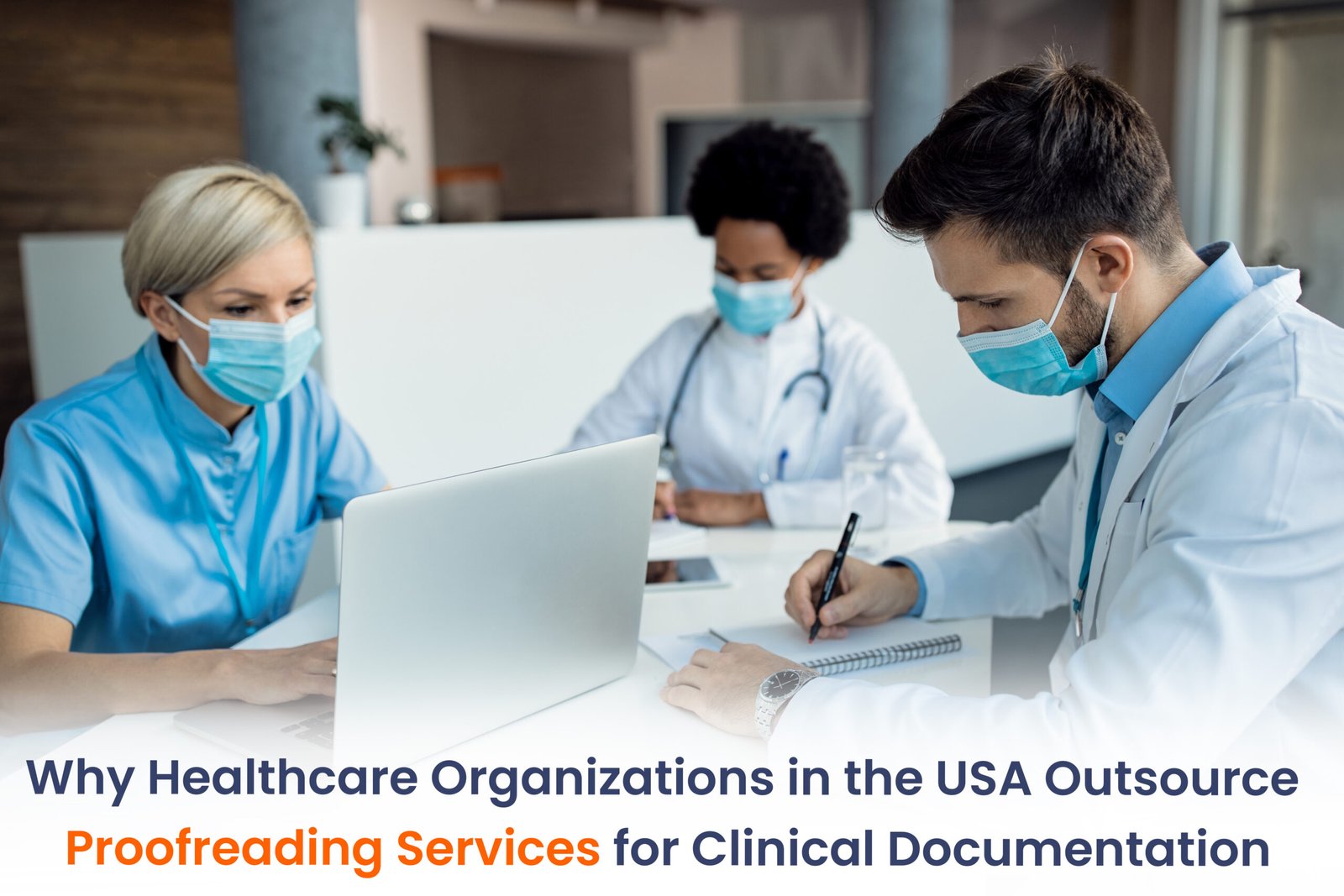
Clinical documentation drives almost every decision inside a healthcare system. It guides patient care, controls billing, and proves regulatory compliance. When those records slip, the impact spreads fast. The data makes that clear. In a large survey of ambulatory visit notes, about 1 in 5 patients said they found a mistake in their records. Over 40% of those patients judged the errors as serious. That is not a small crack. That is a system signal.
Unclear or inaccurate documentation also feeds billing errors that drain millions each year and trigger claim denials. The pressure builds on every side — clinical, financial, regulatory. That is why healthcare organizations turn to external proofreading support. They want another layer of review that tightens accuracy, enforces consistency, and protects compliance across clinical documentation before small mistakes turn into expensive problems.
The Stakes of Clinical Documentation Accuracy
Clinical documentation carries legal weight, financial impact, and care coordination all at once. These records stand as the official story of a patient’s history and treatment. Every provider downstream depends on that story being clear. When gaps show up, the strain is immediate. Coding professionals have to interpret what should have been explicit, and that guesswork hits diagnosis and procedure coding. Billing accuracy and reimbursement follow the same path. If the record is shaky, the outcome is shaky.
Compliance pressure sits right behind it. Frameworks like CMS reporting and HIPAA mandates expect complete, defensible documentation. Missing detail is not a small oversight — it can trigger audits or penalties. Structured proofreading works as a containment step before records move into financial and legal pipelines. It strengthens clarity and precision early, reducing downstream risk instead of simply polishing language.
Documentation Complexity in Modern U.S. Healthcare Systems
Clinical documentation in U.S. healthcare rarely comes from a single voice. Physicians, nurses, coders, and scribes all write into the same record, and every hand leaves a different imprint. Style shifts. Detail changes. Meaning can blur. Then the EHR steps in. Tools that should speed work — like copy-forward — can drag old or irrelevant information into new notes. Templates can flood a chart with repeated or half-complete text when no one stops to check it.
Add specialty language and abbreviations, and clarity starts to splinter across departments. Now layer in high patient volumes. Documentation teams are pushed to move fast while staying exact, which is a tough balance to hold all day.
Internal review systems feel that strain. Staff end up decoding mixed writing styles and changing clinical language instead of focusing on accuracy. Rigorous proofreading acts like a reset. It standardizes terminology, flags inconsistencies, and catches issues that routine checks slide past.
Operational Pressures Driving Outsourcing Decisions
Documentation demand hits clinicians where it hurts most: time. Research shows physicians spend nearly two hours inside EHR systems and paperwork for every hour of patient care.¹ That imbalance builds pressure fast. In high-volume clinics and hospitals, notes pile up, and careful self-review becomes the first thing to disappear.
Internal QA teams feel the same strain. Reporting cycles hit, audits land, patient surges roll in — and suddenly every timeline shrinks. Records stack up, and finalization slows to a crawl. You can feel the bottleneck forming in real time. Teams start pushing harder, but the work does not magically move faster.
Most organizations just do not have the staffing depth to absorb those spikes. And you cannot drop anyone into that role. Reviewers need real training in clinical language and compliance standards. Without that expertise, mistakes slip through. So the pressure stays high, the queue grows, and everyone feels the strain while the clock keeps running.
Outsourced proofreading does not replace clinicians or QA staff. It stabilizes the workflow. Scalable review capacity expands during peak periods, giving teams breathing room while protecting documentation quality. External reviewers step in when demand surges, so internal staff can stay focused without burnout or emergency hiring.
Specialized Proofreading Skills Required for Clinical Records
Clinical records don’t forgive loose reading. They run on specialized language, abbreviations, and context that general editing simply doesn’t cover. When I look at this kind of documentation, the difference between two nearly identical terms is not cosmetic — it changes clinical meaning and affects how billing teams assign codes. Syntax matters just as much. A vague sentence can push a coder toward the wrong assumption or trigger payer pushback during reimbursement review.
Then there’s continuity. A string of encounters for a chronic condition has to read like one connected story. If terminology drifts or details don’t line up, treatment patterns and patient history start to blur. That’s where consistency checks carry real weight.
Skilled proofreading also catches internal conflicts — findings that don’t agree, missing information, or phrasing that clouds clinical intent. And beyond clarity, records have to meet documentation standards used in audits, accreditation reviews, and compliance checks. Tight proofreading reduces the risk of flags that come from unclear or inconsistent documentation, long before those issues become formal findings.
Financial and Compliance Benefits of External Proofreading
Clear clinical documentation decides how a payer reads a claim and how exposed an organization looks during a compliance check. One weak sentence, one missing detail, and suddenly the whole record feels shaky. The Centers for Medicare & Medicaid Services keeps pointing to the same problem: incomplete or unclear notes sit behind a lot of improper payments and denials. Coders and auditors are not guessing. They lean on what is written to justify every billed service. That makes audits easier to defend.
External review cuts down the back-and-forth caused by missing details or vague phrasing. Instead of constantly fixing paperwork, compliance teams can stay focused on oversight. Strong records hold their ground during payer scrutiny and internal audits, which reduces operational drag. From a budgeting angle, outsourced proofreading adds steady review capacity, so documentation spikes do not turn into sudden staffing pressure.
Scalability and Turnaround in High-Volume Environments
Healthcare documentation never sits still. Volume swings hard during regulatory reporting cycles, payer audits, and sudden spikes in patient intake. One moment the system feels manageable, and the next it is flooded. Federal oversight bodies already recognize that audit and reporting periods push documentation review demands way up. Records have to move fast, but accuracy cannot slip. That pressure is real, and it hits teams all at once.
This is where scalable proofreading capacity becomes survival infrastructure. During those surge windows, organizations need rapid turnaround without sacrificing documentation standards. External review teams can scale with the workload, then pull back when volume stabilizes. That elasticity prevents bottlenecks that could derail billing timelines or compliance readiness.
Strong proofreading services do not bulldoze existing workflows. They slide into them. Records keep moving through the same clinical and administrative pipelines. Nothing stops. Nothing gets rerouted. The difference is tighter quality control riding alongside the flow. You feel the pressure spike, but the system does not choke.
That flexibility is what lets a healthcare organization take a sudden surge head-on. Volume jumps, timelines shrink, expectations stay high — and the documentation still comes out clean, consistent, and ready for audit. The workload gets heavier, but the standards do not bend.
Data Security and Confidentiality Considerations
Clinical documentation carries protected health information, so the stakes are never casual. The moment records leave an internal system for external review, privacy becomes a live wire. The HIPAA Security Rule is not a suggestion. It demands administrative, physical, and technical controls that restrict access, secure data in transit, and log activity. Every touchpoint needs accountability.
When proofreading workflows line up with those safeguards, records move without exposing patient information. Secure transfer protocols lock the channel. Role-based access keeps eyes limited. Audit trails record exactly who handled what and when. Nothing floats untracked.
Specialized proofreading providers build their systems around these healthcare risk realities because they operate as HIPAA business associates. That status is not cosmetic. It extends enforceable confidentiality beyond the healthcare organization, keeping protections intact across the full documentation lifecycle.
Strategic Value Beyond Error Correction
Proofreading is not just about fixing stray mistakes. When review happens consistently, documentation language starts aligning across departments. Communication sharpens, and records match federal expectations for uniform, complete reporting tied to quality measurement. You can feel operations settle because teams are no longer interpreting records differently.
Patterns surface fast. Reviewers flag recurring issues, and that feedback feeds directly into staff training. Instead of chasing isolated errors, organizations strengthen internal documentation habits. That discipline supports larger quality improvement work, where accurate records drive evaluation of care processes and outcomes.
Over time, documentation becomes dependable infrastructure. Clinical data used for reporting and analytics stabilizes, which agencies like the Agency for Healthcare Research and Quality identify as critical for performance measurement and system improvement. Structured proofreading locks in these gains, sustaining documentation practices that deliver long-term operational insight.
Conclusion
Clinical documentation accuracy hits real systems, not just paperwork. It drives reimbursement, compliance readiness, and continuity of care. When records slip, the consequences show up immediately in billing queues, audit exposure, and patient handoffs. You feel the friction across the operation. Structured proofreading is not cosmetic cleanup. It is a safeguard that keeps small errors from turning into operational problems.
As documentation volume rises and regulatory pressure tightens, review workflows have to stretch without choking clinical work. The system still needs to move. Scalable proofreading protects that flow, so accuracy holds even when demand spikes.
QA Solvers supports this balance through healthcare-focused proofreading and technical quality review that strengthens clarity, consistency, and audit preparedness inside active pipelines. Organizations searching for the best proofreading services ultimately need reliability, healthcare awareness, and secure workflows that protect documentation integrity from draft to final record.