
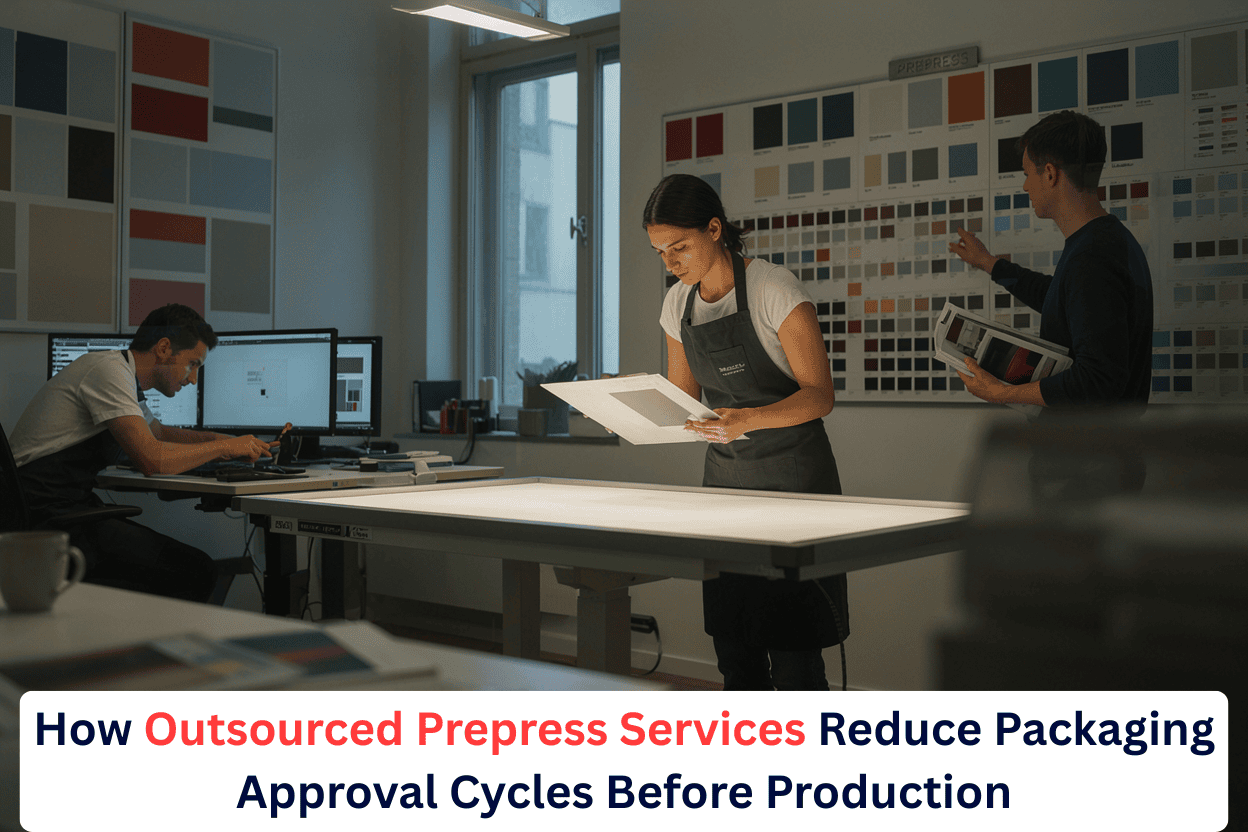
Packaging approvals have a way of dragging on, and most of the time, it is not because people cannot make a decision. It is because technical issues show up when the files are already in the approval cycle. Now reviewers are busy pointing out production errors instead of reviewing the packaging itself.
The FDA is strict about packaging artwork and labeling for a reason. Documented specifications and formal approval procedures are there because even a small inaccuracy can affect product quality, traceability, or regulatory compliance. That is not something you want to discover after the packaging has already gone into production.
Prepress specialists validate artwork, verify production specifications, and resolve mechanical errors before the files reach reviewers. The approval process stays focused on business and regulatory decisions instead of technical corrections, and production keeps moving.
Where Packaging Approval Cycles Lose Time
Approval delays almost never happen because of one big decision. They build up little by little. Feedback sits across long email threads. Someone marks up a PDF. Someone else leaves comments inside the email itself.
After a while, nobody is completely sure which version was actually approved or why a particular change was made. Then reviewers from different regions get involved, handoffs take longer, and one late comment sends the whole thing back to a stage that everyone else had already finished.
The bigger cost sits in what reviewers are asked to look at. When incoming files carry unresolved dieline, resolution, or color problems, those defects consume review attention that should go to copy and design.
Converters receiving artwork from multiple brand teams face the same issue in reverse: every file arrives under a different set of conventions, and each mismatch against print specification generates another round of correction.
Preparing Print-Ready Files Before the First Review
A good outsourced prepress team does not wait for the first review to find problems. By that stage, the file should already be in good shape. Before anyone even looks at it, it goes through automated preflight against a documented print specification. Color mode, image resolution, embedded fonts, linked assets, bleed, and trim all get checked first.
The same attention goes into the structural dieline. It is reviewed against the approved pack format to make sure the cut, fold, crease, and safe zones are exactly where the converter expects them. That way, the file reaches review because it is ready, not because someone is hoping to find out what is wrong with it. Elements that fall outside a fold panel or crowd a crease are corrected at this stage rather than after a reviewer flags them in round two.
Files that clear these checks enter review as production-ready artwork, which means the first round produces design feedback instead of a list of mechanical defects to fix and resubmit.
Verifying Text, Barcodes, and Regulatory Content
Copy errors carry the highest cost of any approval failure, and they are the hardest to catch by reading. Esko reports that close to 40% of product recalls stem from labeling errors, with allergen statements, ingredient declarations, and product claims among the most frequent causes.
Outsourced prepress work applies automated text comparison, checking artwork character by character against the approved source copy to surface dropped words, altered warning statements, and reading-order changes.
Barcodes are decoded and graded against ISO standards, and Braille is verified where regulation requires it. Because these checks run before circulation, regulatory and quality reviewers spend their round confirming content rather than hunting for transcription faults.
Resolving Color Expectations Through Structured Proofing
Color disputes stretch approval cycles because they are subjective until someone makes them measurable. Brand teams judge a spot color on one screen, the converter matches it on another substrate, and the gap surfaces only when a physical proof lands weeks later.
Prepress teams remove that ambiguity by mapping brand colors to defined values, building separations for the specific press process and substrate, and issuing color-managed proofs viewed under controlled conditions.
Calibrated soft proofs let remote stakeholders assess the same color reference at the same time, so a decision that once waited on a shipped hard proof happens within the review window. Physical proofs then confirm a result the team has already agreed on.
Consolidating Feedback and Version Control Across Reviewers
Packaging sign-off usually involves marketing, regulatory, legal, quality, and the converter, each working to a different priority. When their comments arrive separately, prepress teams end up reconciling contradictions instead of applying changes, and a single round stretches across days of clarification.
An outsourced prepress function collects annotations against one controlled file, resolves conflicts before implementation, and returns a single updated version with a record of what changed and who requested it.
Every reviewer works from the current file rather than a copy saved locally weeks earlier. That audit trail also settles the question that stalls late-stage approvals: which version carries sign-off, and from whom.
Scaling Adaptations Across SKUs and Markets
A single design rarely stays single. Pack sizes, flavor variants, language versions, and market-specific claims multiply one approved artwork into hundreds of files, and each adaptation rebuilt by hand introduces a fresh chance of error and a fresh approval round.
Outsourced prepress teams derive adaptations from an approved master, merging translated copy and regional content onto a fixed layout instead of recreating it per market. Structural elements, brand colors, and cleared claims stay locked; only the variable content changes.
Reviewers then check what is genuinely new, which keeps approval effort proportional to the difference rather than to the file count. The same discipline holds when volume rises during seasonal or promotional cycles.
Conclusion
Approval cycles shorten when the work that causes rework moves upstream. Files validated against print specification, copy verified against approved source, color settled through managed proofs, and adaptations built from a controlled master all reduce the number of rounds an artwork needs before it reaches production.
Providers like QA Solvers support brands and converters with proofing, typesetting, copyediting, graphic design, and color management across packaging projects. Used at the front of the cycle, outsourced prepress services turn approval from a series of corrections into a shorter sequence of decisions.

