




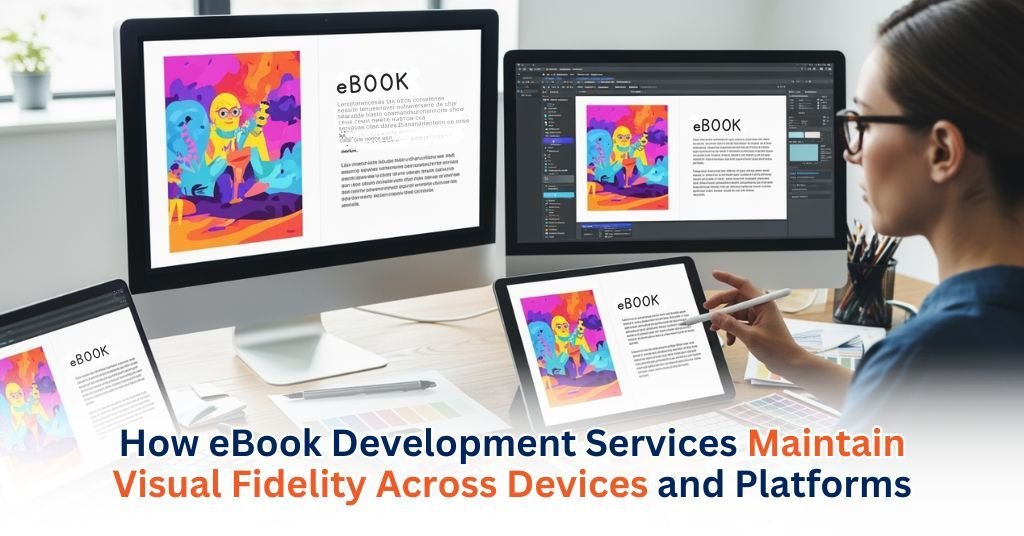
In 2024, more than half the world scrolled through their screens. Over 63% of web page requests came from mobile devices. Phones, tablets, laptops—every screen became a classroom, a library, a reading desk.
For eBook development, that shift changed everything. Each page now has to adapt and look right on every screen. The spacing, images, and typography must hold steady—no distortions, no uneven breaks.
Readers expect clear visuals, intuitive navigation, and smooth performance. The screen may differ, but the reading experience can’t lose balance.
That’s where professional eBook development services come in. They merge design accuracy with technical flexibility. They test, refine, and optimize until every page performs the same way everywhere.
Each layout stays true—consistent, readable, and reliable—no matter the device.
What Visual Fidelity Means in eBook Development
You open an eBook, and something feels off—the fonts shift, the spacing looks wrong, and the colors lose their depth. That’s what happens when visual fidelity breaks. In eBook development, every line, every margin, and every color code has a job.
You fight to keep the design intact while making sure it adapts to every screen. Fixed layouts hold the visuals steady; reflowable ones keep it readable.
The trick is balance—preserve the design’s soul without breaking function. You code, test, recheck—again and again—until it looks and reads right everywhere. That’s visual fidelity, and it takes precision, not luck.
Pre-Production: Design Preparation and Asset Optimization
Design Standardization
It starts with a close look—layouts, fonts, margins, image sizes. Every inch checked. Nothing slips through. Developers tighten the visuals until they follow digital publishing standards like muscle memory. Templates shift between portrait and landscape without breaking rhythm, giving readers a smooth flow on any screen.
Asset Optimization
Every image, icon, and graphic goes through the same drill. Resized, refined, and balanced for clarity and speed. No blurs. No lag. Color profiles locked in so tones stay steady, contrast sharp, and visuals clean across every display.
Responsive Planning
Content bends, never breaks. Headings adjust, tables reformat, infographics reshape. Everything stays readable, clear, and intact. Whether it’s a phone, tablet, or desktop, the layout holds its ground. The story stays seamless, no matter where it’s opened.
Conversion and Formatting Techniques
Expert developers use precise formatting workflows to ensure eBooks render consistently across platforms.
Format Conversion
Source files are converted into EPUB3, HTML5, or interactive PDF—formats known for stability and compatibility across reading systems. Each format preserves the original design while ensuring smooth performance across devices.
Metadata and Style Sheets
Metadata is embedded for identification and discoverability, while CSS style sheets control spacing, alignment, and image behavior. Consistent styling ensures that headings, fonts, and layouts appear uniform in every environment.
Accessibility Integration
It starts with inclusion at the core. Developers add alt text, landmarks, and tags without breaking flow or design. Every image, chart, and button gets its purpose defined. The layout stays clean. The experience stays equal. Everyone reads, moves, and interacts without barriers.
Cross-Device Consistency
Then comes the real test. Every font, color, and animation goes through screen after screen—browser to browser, tablet to desktop. Developers watch how the text holds, how videos play, how links respond. No element slips, no color shifts. What you see on one device is what you get on all. It’s not luck—it’s deliberate balance built line by line, test by test.
Testing Visual Fidelity Across Devices and Platforms
Cross-Device Testing
You open an eBook on your tablet—it looks perfect. Then you check your phone, and the layout shifts. That’s the moment we catch. We run every file across screens—eReaders, tablets, smartphones, desktops—watching how images sit, how text flows, how space breathes. We make sure nothing breaks. Every page holds its balance.
Platform Validation
Then comes the real test. Apple Books. Kindle. Google Play Books. LMS viewers. Different systems, different rules. We push the same file through each one, checking how it behaves. Does the typography hold? Do margins stay clean? That’s how we confirm the design works everywhere, not just on one screen.
Error Correction and Consistency Checks
We hunt down the glitches—cropped images, drifting lines, font mismatches, color breaks. Every issue gets fixed until spacing, alignment, and tone stay true across platforms.
Quality Assurance Workflow
Before release, every eBook passes through final review cycles. That’s where QA Solvers’ quality control takes over—tight checks, clean visuals, flawless function, no surprises when readers hit download.
Maintaining Fidelity Through Updates and Revisions
Frequent content updates, if not carefully managed, can disrupt an eBook’s design integrity and consistency across devices.
To prevent this, developers use standardized templates and controlled versioning that preserve the original layout through each revision. Metadata version control keeps updated files synchronized with LMS and distribution platforms, ensuring readers always access the latest version without display inconsistencies.
QA Solvers follows a structured content update process that maintains uniform formatting, typography, and layout precision across all iterations—preserving both design fidelity and user experience from the first release to every subsequent update.
Why Visual Fidelity Matters to Publishers and Institutions
Maintaining visual fidelity isn’t just about good design—it’s about trust. The moment a learner opens an eBook, every line, color, and graphic should feel balanced and intentional. The visuals shouldn’t distract or drift off rhythm. When everything aligns, learners stay focused. The brand feels stable.
The experience flows without friction. Educators rely on clean tables, crisp diagrams, and interactive elements that actually respond. Publishers count on cross-device reliability that doesn’t collapse when screens change.
Every inconsistency breaks flow, every fix costs time. That’s why visual fidelity matters—it keeps design intent alive, content accurate, and delivery seamless. It cuts down post-release issues, user confusion, and support chaos. And yes, it ties straight to accessibility. Because when visuals work for everyone, learning feels effortless. That’s the point—precision, consistency, and clarity across every platform.
Conclusion
You open an eBook and expect it to look the same everywhere—tablet, laptop, or phone. But then the layout shifts, the images stretch, and the design just collapses. The rhythm breaks. The flow goes missing. What was crisp turns clumsy. It’s not the reader’s fault. It’s the file that failed to hold its shape.
That’s when the reading flow dies. Visual fidelity isn’t a design luxury; it’s survival. Every font, margin, and graphic must hold its place across screens. That’s what keeps learners focused and readers engaged.
QA Solvers knows this game well. We align structure, format, and interactivity so nothing falls apart. Our eBook development and QA processes catch the glitches before your users do. Every layout is checked. Every file tested. Every page is consistent. The result? Digital publications that look sharp, load clean, and stay true—on any platform or LMS.